
What Causes Uneven or Wobbly Pavers?
If your patio pavers rock when you walk across them or feel uneven underfoot, it’s a sign that something below the surface isn’t right. Uneven or wobbly pavers are one of the most common patio issues we see in Minnesota, and they almost always point to a base or joint problem rather than a surface issue.
Understanding what causes pavers to move helps determine whether your patio needs patio repair or a simpler fix.
Base Failure Beneath the Pavers
The most common cause of uneven pavers is base failure. Paver patios rely on a compacted base layer to support the surface evenly.
Base failure can happen when:
The base wasn’t compacted properly during installation
Inadequate base thickness was used
Water infiltrates and washes material away
Freeze–thaw cycles create voids beneath the pavers
Once the base loses stability, the pavers above it begin to settle unevenly, causing movement and rocking.
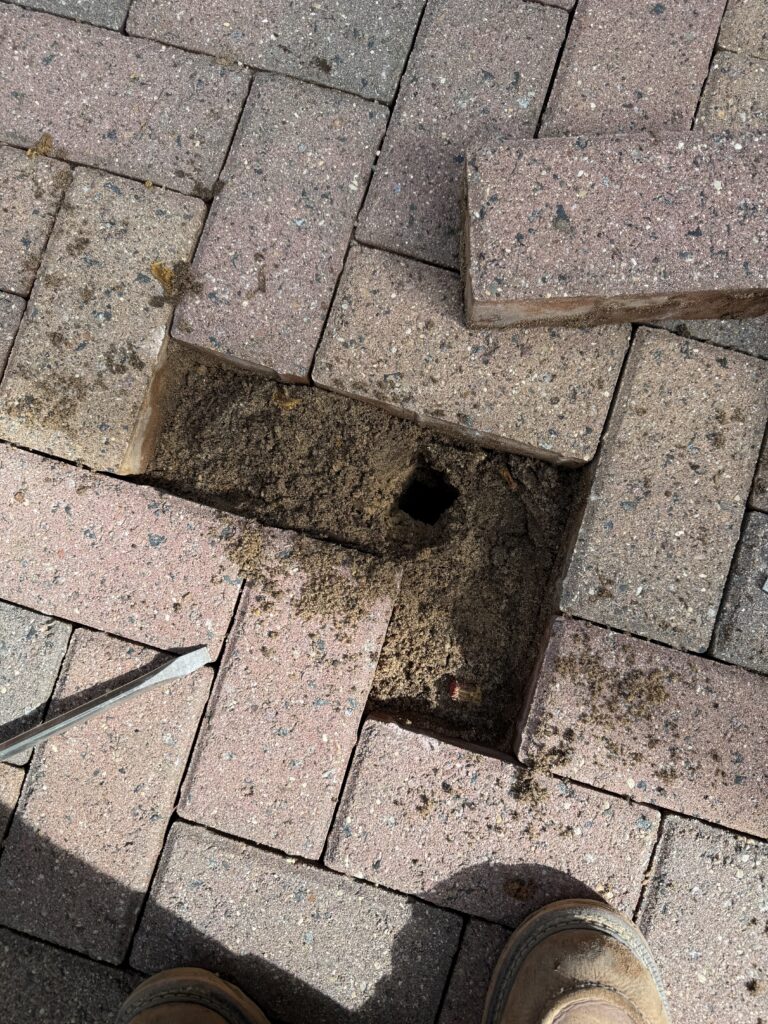
This image shows two pavers that wobbled prior to repair. It was discovered that the installers of the patio left a wooden stake underneath the pavers (used for grading purposes). This stake heaved with the freeze-thaw and caused the pavers to wobble.
Joint Material That Can’t Hold Pavers in Place
Joint sand plays a bigger role in stability than many homeowners realize.
When joint material fails:
Pavers lose lateral support
Edges begin to shift outward
Individual pavers start to rock
This often happens when joints are filled with regular sand that has washed out over time. Upgrading joints with polymeric sand can help lock pavers together—but only if the base below is still sound.
How Water Makes Pavers Worse Over Time
Water is a major contributor to paver movement.
Common water-related issues include:
Poor surface drainage
Downspouts dumping water onto the patio
Low spots where water pools
As water moves through the joints and into the base, it weakens the supporting material. During winter, that moisture freezes and expands, accelerating movement and causing pavers to shift out of place.
Why Quick Fixes Don’t Stop Paver Movement
It’s tempting to try a fast fix when pavers start to wobble.
Common attempts include:
- Adding sand to the joints
- Pressure washing to clean the surface
- Tapping pavers level without removing them
These fixes may improve how the patio looks temporarily, but they don’t address the underlying cause. Without stabilizing the base or restoring joint integrity, the movement will return.
When Wobbly Pavers Mean Repair Is Needed
Not all paver movement means a full rebuild, but some signs point to deeper issues.
Patio repair is usually needed when:
Pavers rock even after re-sanding
Sections continue to sink over time
Water collects in the same areas repeatedly
Movement affects larger sections of the patio
In these cases, proper patio repair involves lifting pavers, rebuilding the base, and re-installing the surface correctly.
When a Patio Refresh May Be Enough
If the base is still intact, a refresh may solve the problem.
A refresh can work when:
Pavers are mostly level
Movement is minimal
Joints are worn but the base is stable
This often includes re-sanding joints with polymeric sand and cleaning the surface to restore appearance and stability.
Uneven Pavers in Minnesota’s Climate
Minnesota’s freeze–thaw cycles, heavy spring moisture, and soil movement make patios especially vulnerable to shifting.
We regularly see uneven pavers across Minneapolis, Saint Paul, and surrounding Minnesota communities—especially after winter. Addressing the root cause early can prevent small issues from turning into larger repairs.