
Do Steel Edging Restraints Really Help Patio Longevity?
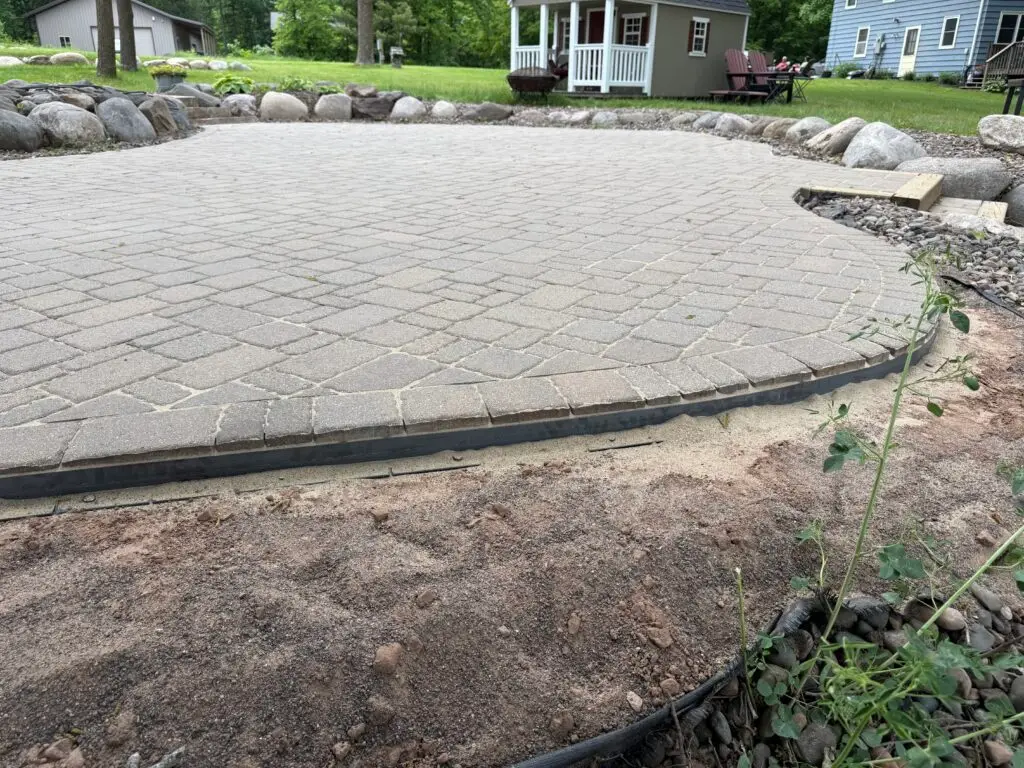
Steel edging restraints don’t get much attention, but they play a critical role in how long a paver patio stays stable. Many patios that shift, spread, or develop uneven edges aren’t failing because of the pavers themselves—they’re failing because nothing is holding them in place.
Understanding what steel edging does helps explain when it’s worth adding and how it supports long-term patio repair results.
What Edging Restraints Do for a Paver Patio
Edging restraints are designed to keep pavers from moving outward over time.
Their primary functions include:
Locking the outer pavers in place
Preventing lateral spreading
Maintaining tight joints
Supporting the integrity of the base
Without proper edging, even a well-built patio can slowly shift under foot traffic, freeze–thaw cycles, and seasonal soil movement.
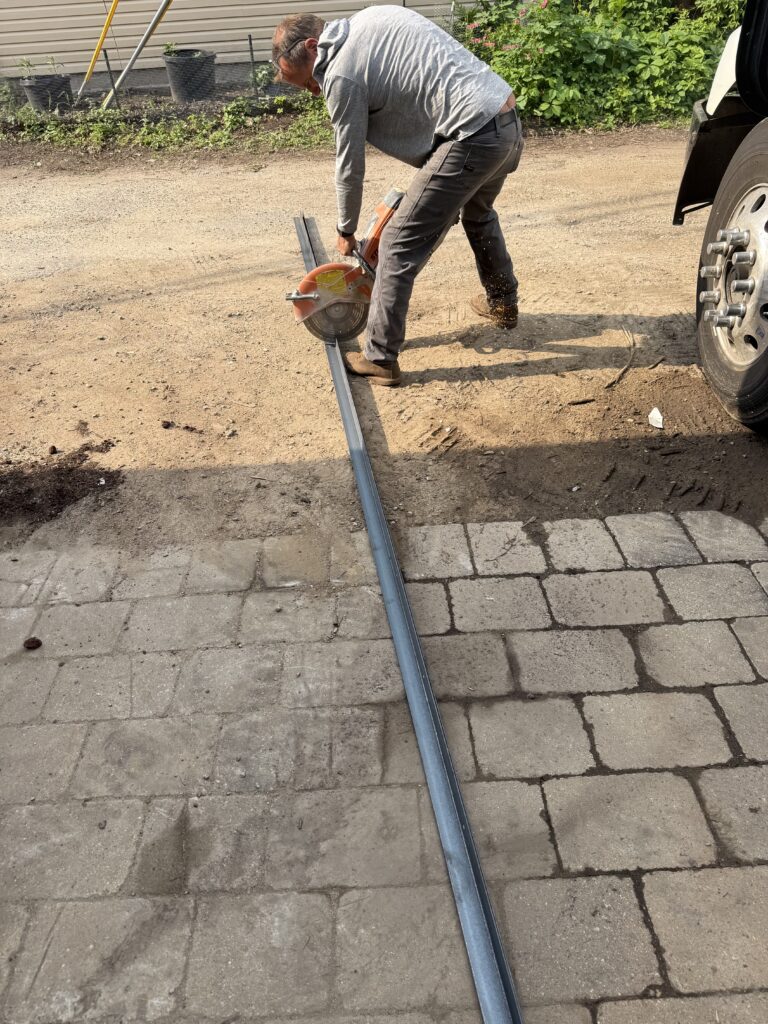
This image shows a step in creating the steel edging, cutting it to size. 2
Why Plastic Edging Often Fails Over Time
Many patios are installed with plastic edging because it’s inexpensive and easy to work with. However, plastic edging has limitations—especially in colder climates.
Common issues include:
- Cracking or becoming brittle in the winter
- Stakes loosing or pulling out
- Edging warping over time
Once edging fails, pavers begin to drift, joints open up, and movement accelerates.
How Steel Edging Improves Patio Stability
Steel edging provides a much more rigid and durable restraint system.
Steel edging:
Resists movement under pressure
Holds shape through freeze–thaw cycles
Anchors securely into the ground
Keeps pavers aligned long-term
For patios that have already been repaired, steel edging helps protect the work by preventing future spreading and edge failure.
When Steel Edging Makes the Biggest Difference
Steel edging isn’t always required, but it’s especially beneficial in certain situations.
It’s most effective when:
Patio edges are starting to spread
Pavers near borders feel loose
Repairs have been made to the base
Longevity is a priority
In many patio repair projects, adding steel edging significantly improves long-term performance with minimal added cost.
Can Steel Edging Fix an Existing Patio Problem?
Steel edging helps prevent future movement, but it doesn’t correct existing base failure.
If pavers are already sunken or uneven:
The base must be corrected first
Pavers need to be reset and compacted
Edging is then installed to lock everything in place
Steel edging should be viewed as a reinforcement, not a standalone fix.
Steel Edging and Minnesota’s Climate
Minnesota’s freeze–thaw cycles put constant stress on patio edges. Without strong restraints, pavers gradually work their way outward as the ground expands and contracts.
We regularly install steel edging on patios throughout Minneapolis, Saint Paul, and surrounding Minnesota communities to help repaired patios hold their shape through the seasons.
Is Steel Edging Worth It?
For homeowners looking to extend the life of their patio, steel edging is often a smart upgrade.
Benefits include:
Improved stability
Reduced joint movement
Less long-term maintenance
Better protection of patio repair work
It’s a small detail that makes a noticeable difference over time.