
How Long Does Patio Repair Last in Cold Climates?
One of the most common questions homeowners ask before committing to a repair is how long it will actually last—especially in a cold climate like Minnesota. With freeze–thaw cycles, heavy moisture, and shifting soils, it’s fair to wonder whether patio repair is a short-term fix or a long-term solution.
When done correctly, patio repair is designed to last for years, not just a season.
What Determines How Long Patio Repair Lasts
The lifespan of a patio repair depends less on surface materials and more on what’s happening underneath.
Key factors include:
Quality of base preparation
Proper compaction techniques
Drainage and water management
Joint material used
Edge restraint strength
Repairs that address only surface issues tend to fail quickly, while repairs that correct the base are built to withstand repeated freeze–thaw cycles.
Why Cold Climates Are Hard on Patios
Cold climates put patios under constant stress.
In Minnesota:
Water enters joints and base layers
Freezing causes expansion
Thawing creates voids
Repeated cycles weaken unsupported areas
This is why patios that aren’t properly repaired continue to sink or shift year after year. Long-lasting patio repair focuses on preventing these conditions from damaging the base.
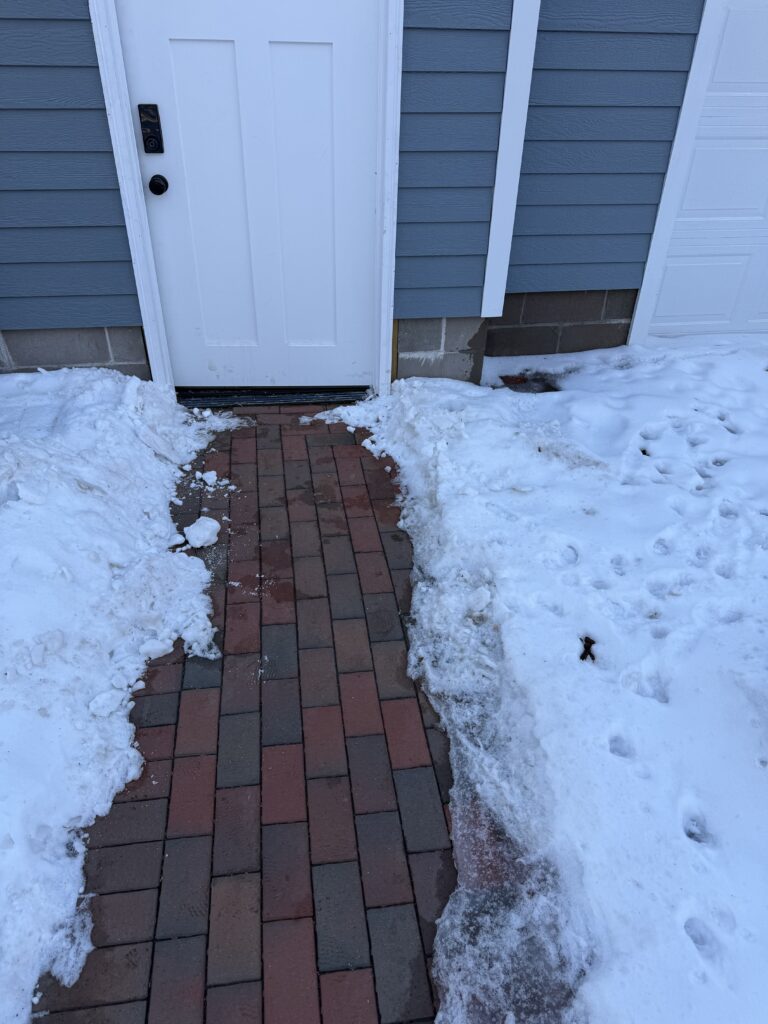
Minnesota’s brutal winters don’t just affect the surface—repeated freeze–thaw cycles below the pavers lead to long-term patio failure if the base isn’t properly built.
How Proper Base Repair Extends Patio Life
A stable, well-compacted base is the foundation of a long-lasting patio.
Proper base repair:
Restores uniform support beneath pavers
Prevents future settlement
Improves load distribution
Reduces movement during seasonal changes
When the base is rebuilt correctly, the surface above it performs the way it was originally intended to.
The Role of Joint Material in Longevity
Joint material plays a supporting role in how well a repaired patio holds up.
Using polymeric sand:
Helps lock pavers together
Reduces washout
Limits weed and insect activity
While joint material alone won’t fix structural issues, it helps protect properly repaired patios from surface deterioration.
Why Edge Restraints Matter Over Time
Edge restraints help maintain the shape and integrity of a patio.
Without strong edging:
Pavers slowly spread outward
Joints open up
Movement increases
Adding steel edging during patio repair helps prevent these issues and extends the life of the repair, especially in areas exposed to freeze–thaw cycles.
Maintenance Still Matters After Repair
Even well-repaired patios benefit from occasional maintenance.
Simple steps include:
Monitoring joints for wear
Avoiding aggressive pressure washing
Addressing drainage issues early
Basic upkeep helps repaired patios last longer and reduces the likelihood of future issues.
How Long Should You Expect a Patio Repair to Last?
When patio repair addresses the underlying base and includes proper finishing details, it can last many years—even in cold climates.
In many cases:
Repairs outlast surface-only fixes by a wide margin
Properly repaired patios perform through multiple winters
Maintenance needs are reduced compared to failing patios
Longevity depends on doing the work correctly the first time.