
Polymeric Sand vs Regular Sand for Patio Joints
If your patio joints are washing out, growing weeds, or constantly needing touch-ups, the type of sand between your pavers matters more than most homeowners realize. Choosing between polymeric sand and regular sand can make a big difference in how your patio looks, performs, and holds up through Minnesota’s freeze–thaw cycles.
Understanding how each option works helps determine whether your patio needs a full patio repair or just a joint refresh.
What Is Regular Sand for Patio Joints?
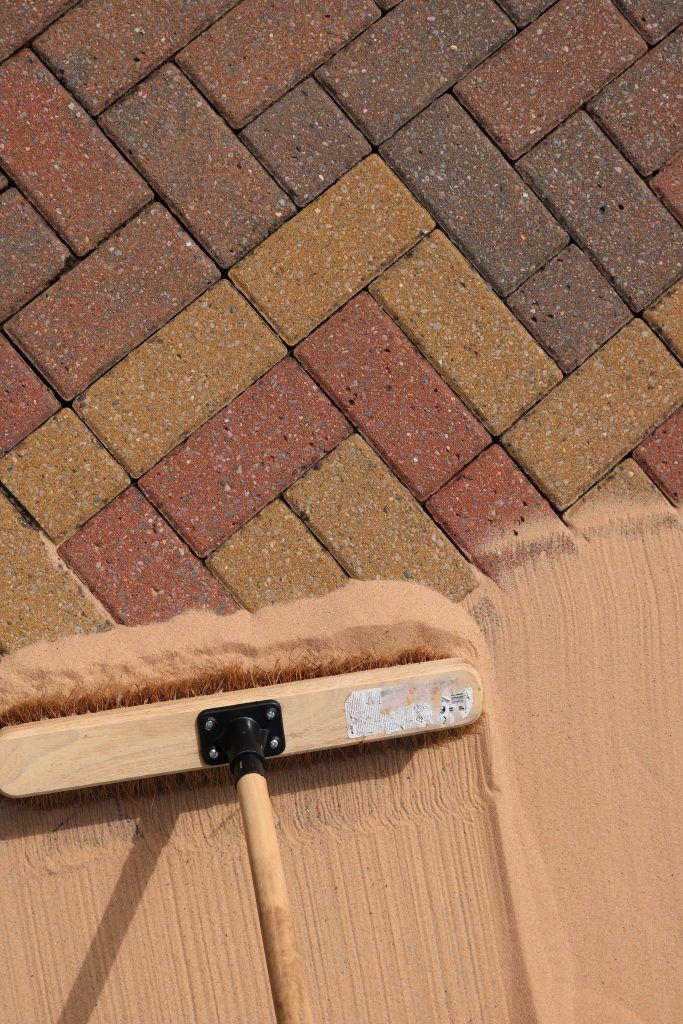
Regular joint sand is the traditional material used between pavers. It’s typically a fine, dry sand that gets swept into the joints after installation or pressure washing.
Regular sand:
Is inexpensive
Easy to install
Allows water to drain freely
However, it does not bind together. Over time, rain, pressure washing, foot traffic, and freeze–thaw movement slowly remove it from the joints.
What Is Polymeric Sand?
Polymeric sand is a specially formulated joint sand that hardens when activated with water. Once cured, it forms a semi-solid bond between pavers.
Polymeric sand:
Locks pavers together
Resists washout
Helps prevent weed growth
Reduces insect activity
It’s designed to stay in place longer, especially in climates with frequent moisture and temperature changes.
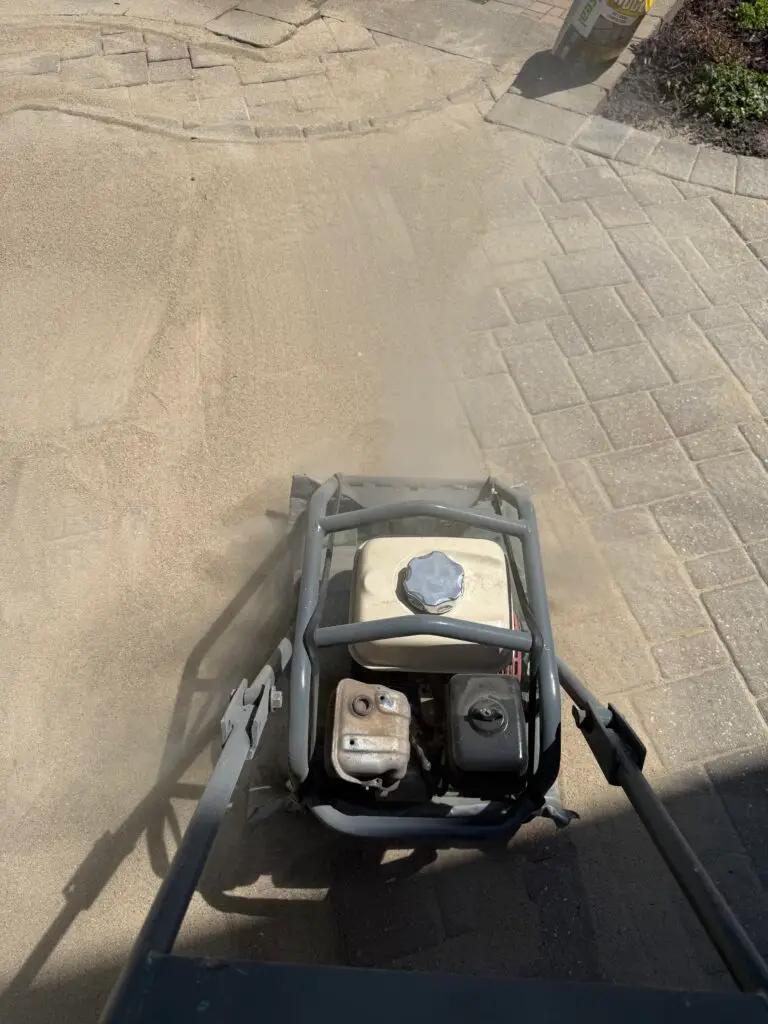
This image shows the compaction process of a polymeric sand install.
Why Joint Sand Fails in Minnesota
Minnesota’s climate is especially hard on patio joints.
Here’s why:
- Water enters the joints during rain or snowmelt
- Freezing temperatures cause expansion
- Thawing leaves gaps and loosened material
- Repeated cycles accelerate sand loss
With regular sand, this process happens faster. Over time, joints widen, pavers shift, and the patio becomes less stable.
This joint failure is often one of the first visible signs that a patio may eventually need patio repair if left unaddressed.
Why Regular Sand Often Needs Frequent Maintenance
Regular sand works—but only with ongoing maintenance.
Common issues include:
Sand washing out after heavy rain
Joints emptying after pressure washing
Weed growth between pavers
Ants and insects nesting in joints
For patios with minimal movement, re-sanding may be enough. But on patios already experiencing base movement, regular sand won’t hold up long-term.
When Polymeric Sand Is the Better Choice
Polymeric sand is ideal when you want longer-lasting results and less maintenance.
It’s often the better option when:
Joints are consistently washing out
Weeds are a recurring problem
The patio has already been repaired and stabilized
You want to extend the life of an existing patio
When installed correctly on a stable base, polymeric sand significantly improves joint durability and overall patio performance.
Can Polymeric Sand Fix a Sinking Patio?
This is a common misconception.
While polymeric sand improves joint strength, it does not fix underlying base failure. If pavers are already sunken, uneven, or rocking, the base must be corrected first through proper patio repair.
Polymeric sand should be viewed as a finishing upgrade—not a structural fix.
Choosing the Right Joint Sand for Minnesota Patios
The right choice depends on the condition of your patio.
In many cases:
Stable patios benefit from polymeric sand upgrades
Failing patios require repair before re-sanding
Surface-only fixes won’t stop long-term movement
We regularly help homeowners throughout Minneapolis, Saint Paul, and surrounding Minnesota communities choose the right approach based on how their patio is actually performing—not just how it looks.