Patio Repair Service Add-ons in Minneapolis–Saint Paul
Service upgrades allow homeowners to enhance their patio repair or small installation project without committing to a full rebuild. These optional upgrades improve durability, appearance, and long-term performance while keeping projects efficient and cost-effective.
All upgrades are available only when paired with a primary service and are recommended based on site conditions, usage, and long-term goals.
Why Service Add-ons Matter
Even a well-repaired patio can fail prematurely if surrounding details are ignored. Missing edge restraint, worn joint sand, and drainage issues can undo a solid patio over time — especially in Minnesota’s freeze-thaw climate.
Homeowners often notice:
-
Pavers slowly spreading or separating along patio edges
-
Weeds, ants, or joint washout
-
Water pooling over drain grate
-
Installs that don’t last as long as expected
Upgrades to repairs address these weak points and help your patio perform as a complete system.
Available Service Add-ons
Polymeric Joint Sand
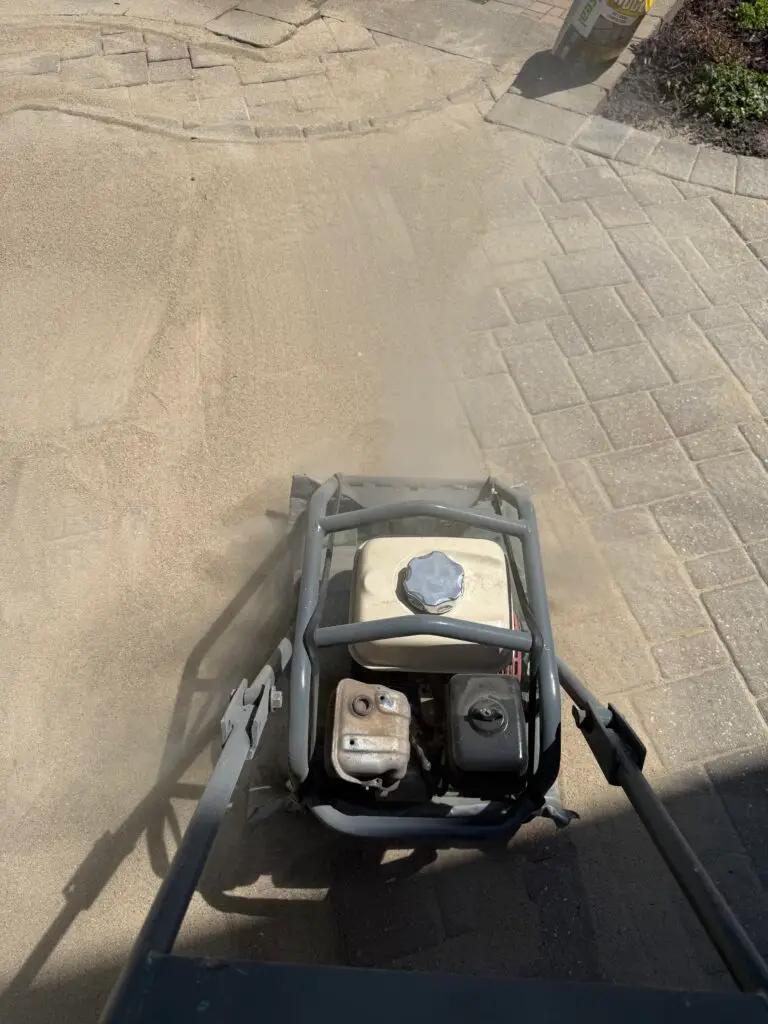
Polymeric joint sand is a binding sand installed into clean paver joints to help lock pavers together, reduce weed growth, and resist erosion from rain and pressure washing.
How This Service Is Performed
-
Existing joint sand and debris are fully removed.
-
Pavers are checked for stability and alignment.
-
Polymeric sand is swept into the joints and compacted.
-
The sand is activated and allowed to cure properly.
Good Fit If...
- The patio is stable and not actively settling.
- Joints can be fully cleaned and dried before installation.
- Long-term durability and reduced maintenance are priorities.
Bad Fit If...
- Pavers are sinking or shifting due to base issues.
- Drainage problems are causing excess moisture.
- Joints cannot be properly cleaned or dried.
Drain Jetting & Clearing
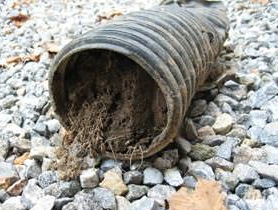
Drain tile jetting and clearing restores proper water flow by removing sediment and debris that block drainage systems around patios and hardscape areas.
How This Service Is Performed
-
Drain tile access points are located.
-
High-pressure water is used to clear blockages.
-
Flow is checked to confirm proper drainage.
Good Fit If...
- Water is pooling near the patio or hardscape.
- Drain tile exists but is slow or clogged.
- Drainage issues are contributing to base washout.
Bad Fit If...
- No drain tile is present.
- Drain tile is crushed or installed wrong
- Drainage issues are caused by grading or soil conditions.
Patio Edging Repair & Install
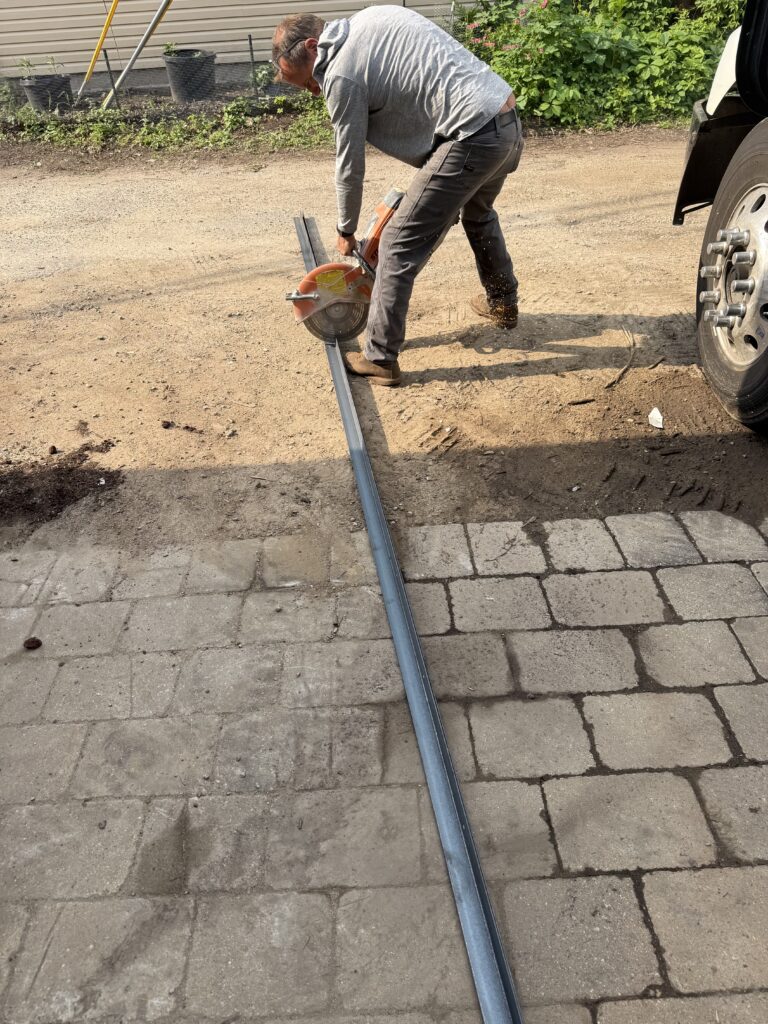
Patio edging repair or installation reinforces the perimeter of a patio to keep pavers from spreading, shifting, or settling over time.
How This Service Is Performed
-
Existing edging is evaluated or removed if damaged.
-
New edging is cut and shaped to match the patio layout.
-
Edging is anchored securely to restrain the pavers.
Good Fit If...
- Pavers are spreading or shifting at the edges.
- Existing edging is damaged, missing, or failing.
- Long-term patio stability is a priority.
Bad Fit If...
- The patio base is failing throughout the surface.
- Edge movement is caused by severe base washout
- Full patio replacement is required.
Primary Services
Add-on services are available only when paired with a primary service such as patio repair or patio refresh.
Service Add-ons FAQs
What is drain tile jetting and why would my patio need it?
Drain tile jetting uses high-pressure water to clear sediment, roots, and debris from underground drainage lines. If water is pooling near your patio or taking a long time to drain after rain, blocked drain tile can be a major contributing factor. Clearing it helps protect the patio base and prevent future settling.
Should drain tile be cleared during patio repair or refresh?
Yes, if drainage issues are present. Repairing or refreshing a patio without addressing blocked drain tile can lead to repeat problems like sinking pavers or washout. Jetting the drain tile at the same time helps ensure the repair lasts longer.
Can drain tile jetting fix all drainage problems?
Jetting is effective for clearing blockages, but it cannot correct improperly installed or collapsed drain tile. If major structural issues are discovered, additional drainage solutions may be recommended.
What is polymeric joint sand and how is it different from regular sand?
Polymeric sand contains binding agents that harden when activated with water. Unlike regular sand, it helps lock pavers in place, reduces weed growth, and resists washout. It’s a popular upgrade for patios that need longer-lasting joint stability.
Why is polymeric sand installed after pressure washing?
Pressure washing removes dirt, buildup, and existing joint sand, leaving the joints empty. Polymeric sand requires clean, open joints to install correctly. Doing both at the same time ensures the sand bonds properly and performs as intended.
Is polymeric sand right for every patio?
Not always. Patios with poor drainage, heavy movement, or unstable bases may not be good candidates. In those cases, structural repairs should be completed before upgrading joint sand.
What does patio edging do?
Edging helps hold pavers in place and prevents the patio from spreading or shifting over time. Without proper edging, pavers are more likely to move, settle unevenly, or lose joint sand.
When should edging be repaired or replaced?
Edging should be repaired or replaced if it’s broken, pulling away, or missing entirely. This is especially important when repairing sunken areas or re-leveling sections of a patio.
Can edging be added to an existing patio?
Yes. Edging can often be installed or upgraded without removing the entire patio. Adding proper edging is a smart add-on that improves the long-term performance of repairs and refresh work.
What is the difference between plastic edging and steel edging?
Plastic edging is lightweight and flexible, while steel edging is rigid and permanently shaped to hold pavers in place. Plastic edging can shift over time, especially in freeze-thaw conditions, whereas steel edging provides long-term structural support that helps prevent patios from spreading or settling.
Do I have to add these services to my project?
No. Add-ons are optional and recommended based on the condition of your patio and surrounding drainage. We’ll explain when an add-on makes sense and when it isn’t necessary.
Is it cheaper to do add-ons at the same time as a repair?
Yes. Adding services like joint sand replacement, edging repair, or drain tile clearing during a repair or refresh is typically more cost-effective than doing them later as separate visits.